
What to expect at your first Reiki session (and how to prepare).
Will I have to take off my clothes? Do I need to believe in it for it to work? What if I fall asleep, start crying, or feel nothing at all?
If any of those questions have been going round your head when you think about Reiki, please know you're in very good company. These are the questions people ask me most often before their first Reiki session, and they're lovely, sensible questions. So let's put the kettle on and walk through what really happens, from the moment you book to the moment you float back out of the door
Before you arrive
You don't need to do anything special to prepare, and you certainly don't need to have read up on energy or chakras beforehand. If you'd like a quick sense of what happens behind the scenes, I've written a simple explanation of how Reiki works, but it's absolutely fine to arrive knowing nothing at all.
On the practical side, wear something comfortable that you can relax in, because you'll stay fully clothed the whole time. It helps to have a glass of water beforehand and to avoid a heavy meal or a big coffee right before you come, simply because it's easier to settle when your body isn't busy digesting or buzzing.
The first few minutes
Your practitioner will usually start with a relaxed chat. They'll ask how you're feeling, whether anything is going on with your health, and what brought you to Reiki right now. This is a good moment to mention any injuries, any areas you'd rather not have hands placed on, or anything that's worrying you.
I'll be honest, this conversation is one of my favourite parts. So many people walk in carrying the whole week on their shoulders, and just being asked how they really are seems to let something settle before we've even begun.
Your practitioner should also explain what they'll do and check that you're happy with light touch. If you'd prefer your hands to hover just above your body instead, that's completely fine and works just as well, so please don't feel awkward saying so.
What happens on the couch
You'll lie down on a comfortable treatment couch, usually on your back, with a blanket over you and a cushion under your knees if that feels nicer. The lights are often low, and quiet music may play in the background.
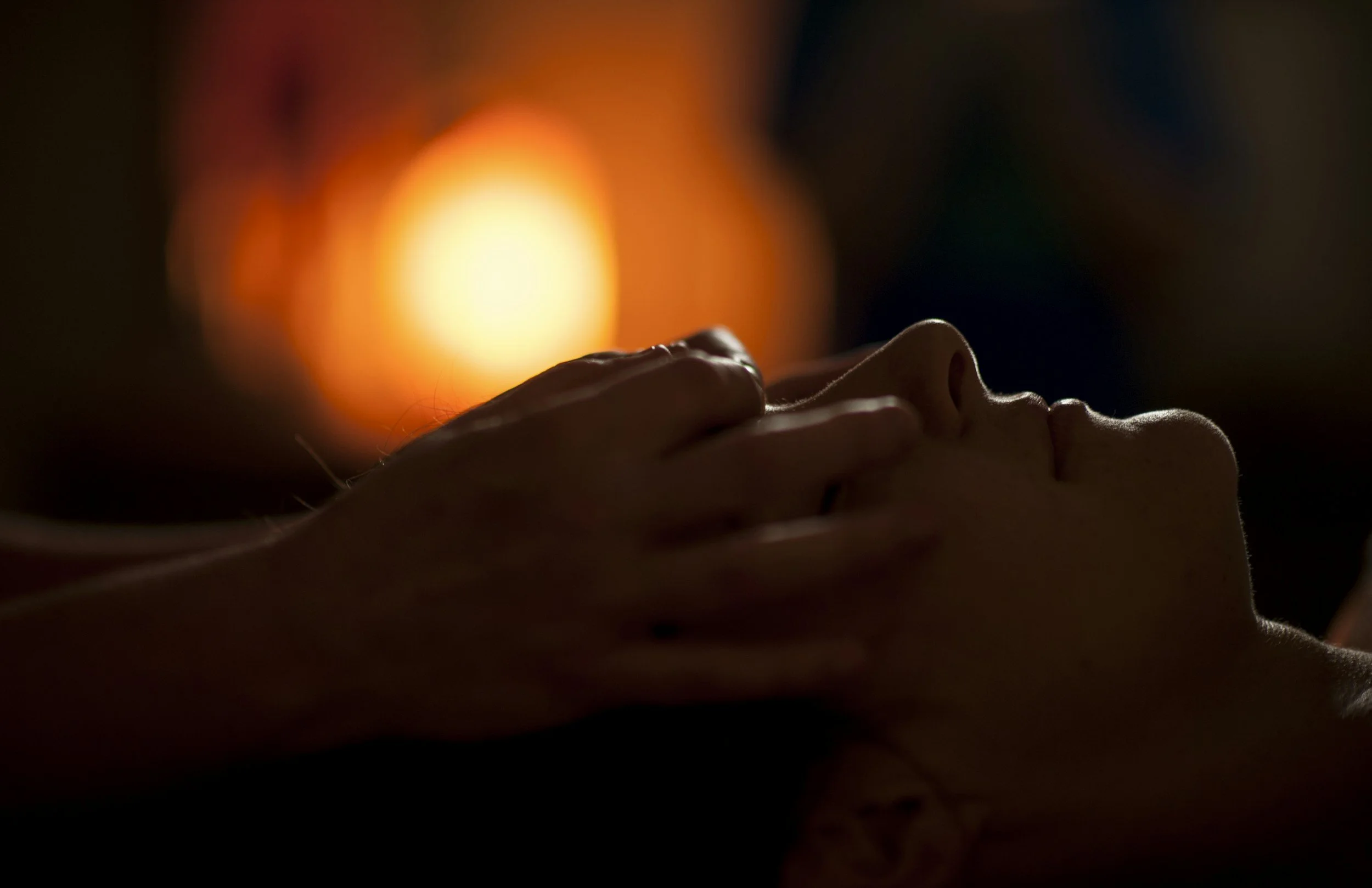
The practitioner will then place their hands lightly on, or just above, a series of positions, usually starting around your head and moving down towards your feet. They'll stay in each position for a few minutes, with no massage, no pressure, and nothing you need to do except lie there, breathe and listen to the music. A full session normally lasts somewhere between 45 minutes and an hour.
You might be wondering what all this is based on, and that's a fair question. The research is still early, and the studies we have are often small, so I'd never claim Reiki can cure anything. If you're curious, I've gathered what we know about the science in one place, because I think you deserve an honest picture.

What you might feel
This is where everyone's experience differs, and there's no right or wrong way for it to go. Many people notice warmth or a tingling feeling where their hands rest, while others feel a lovely heaviness, as if they're sinking into the couch. Some see colours behind their closed eyes, while others feel very little at all and simply enjoy an hour of stillness.
It's also common to drift off to sleep; if that happens, don't worry that you've missed anything. Sometimes emotions bubble up, and a few quiet tears are perfectly natural. Your practitioner will have seen it many times before and will hold the space kindly while it passes.
If you're coming to Reiki because life has felt anxious lately, you might like to read more about Reiki for anxiety and what tends to help.
After your session
When the session ends, your practitioner will give you a moment to come round before you sit up slowly. Have some water, take your time and notice how you feel. People often describe feeling lighter, calmer or a bit dreamy, and some feel tired that evening and sleep really deeply.
Reiki sits alongside medical and psychological care rather than replacing it. If you're living with a health condition, or your mental health has been really tough, please keep working with your GP or therapist, and think of Reiki as a kind, supportive extra for the journey.
Coming home to yourself
Your first Reiki session is a time when you don't have to get anything right. It's simply an hour where someone holds space while you lie down, breathe and remember what it feels like to be quiet inside.
So if you've been curious for a while, why not let this be the week you book that first session? Bring your questions, wear your comfiest clothes and let yourself be looked after for a little while. The calm you're looking for isn't out there somewhere; it's already within you, and sometimes it just needs a quiet moment to remind you it's there.
With love,
Carolina x