
The Sun Line in Palmistry: What It Reveals About Success and Creativity
The Sun line, also called the Apollo line, is one of the most celebrated marks in palm reading. Running vertically toward the ring finger — the Apollo finger — it is traditionally associated with fame, creative fulfilment, talent recognition, and a certain luminous quality in one’s public life. Few features of the palm carry as much optimistic symbolism, and for centuries, palm readers have regarded a clear, deep Sun line as one of the most fortunate signs a hand can carry. It does not appear on every palm, and its absence is never considered a mark of failure, but where it shows itself clearly, it is greeted with a kind of reverence that few other lines inspire.
To understand the Sun line is to understand something about how palmistry thinks of success itself. This tradition does not define achievement purely in terms of money accumulated or status obtained. It thinks in terms of radiance — the quality of being genuinely seen, deeply appreciated, and recognised for gifts that are authentically one’s own. The Sun line, at its core, is about that alignment between inner talent and outer acknowledgement. When it runs strong and clear across the palm, the suggestion is that a person’s creative nature is not being suppressed or wasted but expressed, celebrated, and met by the world with something like understanding. That is a rarer condition than it might sound, and palmistry treats it accordingly.

The line itself can begin in several places on the palm, and where it originates shapes how its energy is interpreted. A Sun line rising from the Mount of Moon, the fleshy mound at the base of the palm on the little finger side, is associated with success that flows through the public imagination. These are people whose gifts land emotionally with others — writers whose words feel personal to strangers, performers who seem to speak directly to individual members of an audience, designers or artists whose work creates a sense of being understood. The recognition they receive is rooted in a kind of intimacy, even at a large scale. Their creativity thrives on connection, and the world tends to respond in kind.
When the Sun line rises instead from the Life line, the story it tells is more inward. Here, the talent is self-generated, deeply personal, and not particularly dependent on external validation to flourish. These individuals tend to carry their gifts with a quiet certainty, and when recognition comes, it feels less like a surprise than a confirmation of what they have always known about themselves. There is something unambiguous about the quality they offer, something that cannot easily be imitated or manufactured, and it is that originality which eventually draws attention.
A Sun line beginning from the Head line tells a different story again. Success here is intellectual and strategic, arriving not through inspiration alone but through careful thinking, planning, and the kind of focused effort that compounds over time. These are individuals who build toward achievement rather than stumbling into it, and the recognition they earn tends to come in middle age, when the groundwork they have quietly laid begins to show its full shape. There is nothing accidental about what they accomplish. They have thought it through.
Starting from the Heart line, the Sun line suggests success that is emotionally rooted and arrives late. Life experience becomes the primary material these individuals work with. It is often after significant relationships, losses, or turning points that their creative voice fully emerges, as though the depth of feeling needed time to ripen into something expressible. The recognition they receive later in life carries a particular weight, because it tends to reflect something genuinely hard-won.
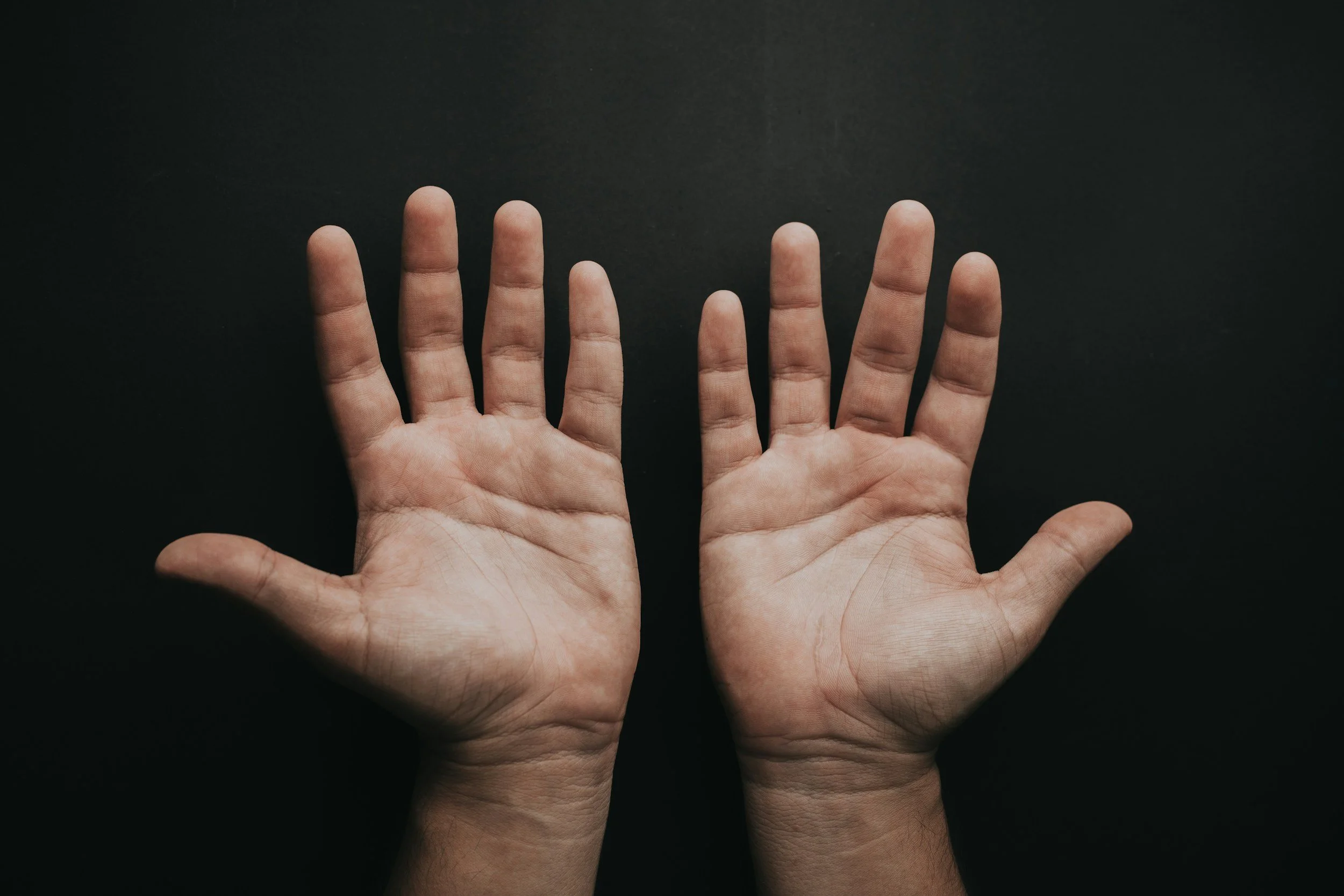
Beyond where the line begins, its quality reveals further nuance. A long, deeply etched, unbroken Sun line running cleanly toward the ring finger is the most favourable configuration, suggesting sustained creative output and consistent recognition across a significant portion of life. These are the individuals most likely to build something lasting, a body of work, a reputation, a legacy that outlives any single moment of attention. Their relationship with their own creativity tends to be stable and productive, less dependent on mood or circumstance than it is for others.
A short Sun line that appears only near the top of the palm, close to the ring finger, still carries positive meaning. It points to recognition arriving later, or to a concentrated period of creative flourishing, even if it does not define the entire life. Brevity here is not weakness. Some of the most significant creative contributions come in compressed, intensely alive periods, and a short Sun line may simply be marking one of those.
Multiple Sun lines running parallel to each other are often read as a sign of versatile talent, a person whose gifts spread across more than one field and who may find recognition in several different arenas over the course of a life. The risk that palmistry sometimes associates with this configuration is diffusion, energy spread so broadly that no single current runs deep enough to carry real weight. But in the right hands, multiple Sun lines can indicate a genuinely multi-dimensional creative life, someone who cannot be confined to a single form of expression and does not need to be.
A broken Sun line, one that interrupts and resumes rather than running continuously, suggests a less even path. Setbacks, changes in direction, or stretches of creative uncertainty may follow periods of recognition. The important thing, in traditional readings, is that the line picks up again. The interruption is not the end of the story. These individuals often discover that the detour itself becomes material, that what seemed like a derailment was in fact a deepening.
Islands, chains, or blurring along the Sun line point to specific periods of difficulty, creative blocks, public misunderstanding, or a loss of confidence in one’s own gifts. These are not permanent conditions, but they are real ones, and palmistry treats them seriously rather than glossing over them. A creative life is rarely untroubled, and the markings on the Sun line tend to reflect that honestly.
What makes the Sun line philosophically rich, even for those who approach palmistry with scepticism, is the particular kind of success it describes. It does not measure the accumulation of wealth or the climbing of hierarchies. It measures something subtler and arguably more meaningful: the degree to which a person’s outer life reflects their inner creative nature. A strong Sun line, in this reading, does not simply mean that success has arrived. It means that the success is real, that it corresponds to something genuine in the person, that the recognition is for something that actually belongs to them.
This is why palmistry places such emphasis on authenticity in discussions of the Sun line. The tradition holds that hollow fame or success built on imitation or performance rather than genuine talent tends not to produce a strong marking, or produces one that is troubled, interrupted, or unclear. The line responds, in some sense, to whether the person is actually living their creative truth or simply going through the motions of a successful life.
Whether one believes in the literal predictive power of palmistry or not, this framing offers something worth sitting with. The Sun line asks not just whether you have achieved something, but whether what you have achieved is actually yours, whether it came from the part of you that is most genuinely alive, most distinctly yourself. That is a harder question than it appears, and it does not go away simply because you stop looking at your palm. The line is just a prompt. The question it raises belongs to everyone.