
Feng shui and burnout: creating a home that helps you recover
When you’re burnt out, rest stops working the way it used to. You sleep and wake up tired. You sit down and don’t quite settle. You spend a whole evening at home and feel no better at the end of it than you did at the start.
Part of that is what’s happened to your nervous system, and that takes time. But part of it is the space you’re trying to recover in. A home that’s busy, bright, cluttered and always mid-task keeps asking things of you, quietly, all day. This is where feng shui and energy clearing become genuinely practical. Not as another project to take on, but as a way of adjusting your surroundings so they hold you rather than drain you.
Why your home matters more when you’re depleted
When you have capacity, you can override your environment. You can work in a noisy room, ignore the pile in the corner, sleep through the streetlight. When you’re depleted, you can’t override anything. Every small demand lands.
Feng shui works with chi, the natural flow of energy through a space. In a balanced home that flow moves easily and you move with it. In a home that’s congested or overstimulating, you’re pushing against it constantly without realising. That’s fine for a while. When you’re already running low, it’s the difference between recovering and staying stuck.

Yin and yang, and why your home is probably too yang
Feng shui describes two qualities of energy. Yang is active, bright, warm, loud, upward. Yin is still, cool, soft, quiet, restful. A healthy home has both, allocated sensibly, yang in the kitchen and the places you get things done, yin in the bedroom and wherever you rest.
Modern homes tend heavily towards yang. Screens in every room, overhead lighting, hard surfaces, background noise, notifications, open-plan spaces where nothing has an edge. If you’re burnt out, you don’t need more stimulation. You need places in your home that are genuinely quiet, and most people don’t have one.
The most useful question you can ask is simple. Where in this house can I actually rest? If the honest answer is nowhere, that’s the thing to fix first.
Practical adjustments that help
Start small and physical. These are the changes that tend to make the fastest difference.
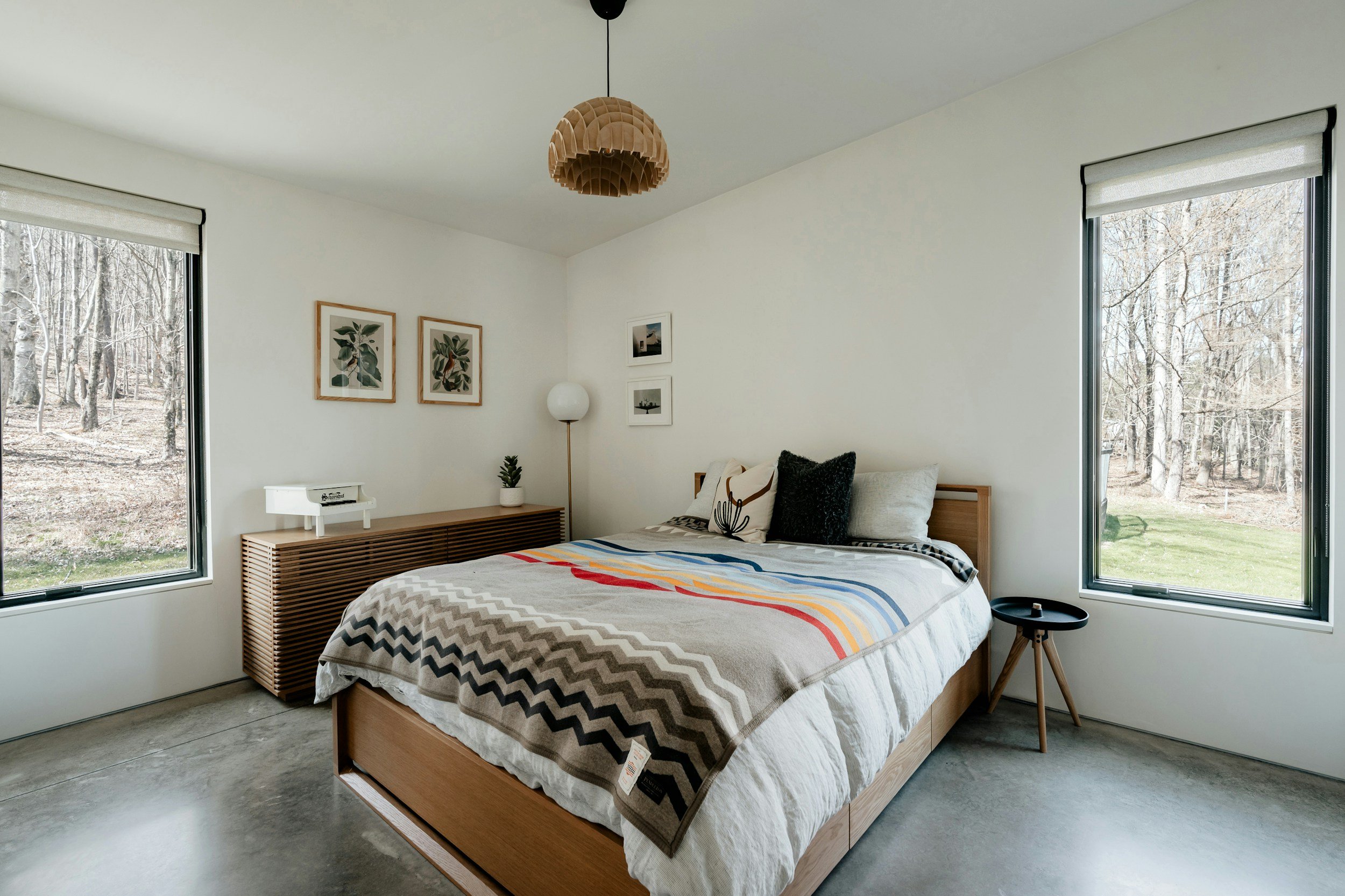
Fix the bedroom before anything else. Bed against a solid wall, with a clear view of the door and space on both sides. No work, no laundry pile, no screens where you can see them from the pillow. Soft, low lighting in the evening.
Take the ceiling light out of the equation. Overhead lighting is stimulating. Lamps at different heights create pools of warmth that let your body wind down.
Clear one room properly rather than five rooms partly. Half-cleared rooms leave you with the mental weight of the job not being finished.
Bring in something living. A plant or fresh flowers introduce wood energy, which supports growth and gentle renewal. They also give you something small and manageable to care for.
Make one corner yours. A chair, a blanket, a lamp, nothing to do. It doesn’t need to be a whole room.
Clutter deserves its own mention here, because when you’re exhausted it multiplies. Every pile is a decision you haven’t made, and looking at forty unmade decisions is tiring in itself. You don’t need to declutter the house. Clear one surface, then another when you have it in you. My guide to clutter clearing and preparing your home for positive energy sets out a gentler way through it.
Where the tiredness lives in the bagua
The bagua is the feng shui map that divides your home into nine life areas. For burnout, two matter most. The health and wellbeing area, at the centre of your home, and the knowledge and self-cultivation area, which relates to rest, reflection and turning inwards.
If the centre of your home is where everything gets dumped, that’s worth knowing. Keep it clear, grounded and simple. My Tibetan feng shui guide to improving the areas of your life explains how to place the map over your own floor plan.
Clearing what’s built up
Long periods of stress leave a residue. If your home has held months or years of pressure, deadlines, illness or worry, the space carries that. You’ll often feel it as heaviness on walking through the door, even when the house is tidy.
Air the rooms properly. Work through with incense or a singing bowl, paying attention to corners and the places you’ve spent the hardest hours. Set a clear intention for what you want the home to support now, which at this point is usually just rest.
If that feels like more than you have energy for, that’s a reasonable place to be. An energy clearing in your home is something I can do for you, and many people find reiki helpful alongside it while their own energy comes back.
Start with one room
You don’t need to reorganise your home. Choose one room, make it restful and let that be enough for now. Recovery tends to build on itself, and a space that supports you gives you somewhere to build from.
If you’d like help working out what your home needs, or you’d rather someone else took it on while you rest, do get in touch.
With love, Carolina x