
Feng shui for a child's room: calm, creativity, safety
A child's room affects how they sleep, how they play and how settled they feel when the day has been a lot.
Feng shui gives you a practical way to look at that room and adjust it so it works with your child, rather than against them. None of this requires a renovation. Small, deliberate changes to layout, colour and clutter can shift how the room feels within a few days.
Why the room matters more than you think
Children pick up on their environment even when they can't explain why. A room that's cluttered, dark or awkwardly laid out can leave a child feeling unsettled without either of you knowing why.
A room that feels ordered, warm and secure gives them somewhere to properly rest and somewhere to properly play. Feng shui simply gives you a framework for making those two things easier.
Start with the bed position
The bed is the most important piece of furniture in the room, so it's the place to start. Where possible, position the bed so your child can see the door from where they're lying, without being directly in line with it.
This is sometimes called the commanding position, and it gives a sense of security because nothing can surprise them from behind or from the doorway.
Avoid placing the bed under a window if you can help it, since this can make sleep feel less settled. Also avoid placing it directly beneath exposed beams or shelving, which can create a subtle sense of pressure overhead.
If the room's shape means the ideal position isn't possible, a mirror positioned so your child can see the door from the bed achieves a similar effect, as long as they don’t see themselves.
Clear the clutter before anything else
Clutter is one of the biggest disruptors of calm in a child's room, and it's usually the easiest thing to fix. Toys, clothes and books that don't have a home create a low-level sense of chaos, even in a small space.
You don't need to remove everything. Just give each category of item somewhere clear to live, and keep the floor space around the bed and door open.
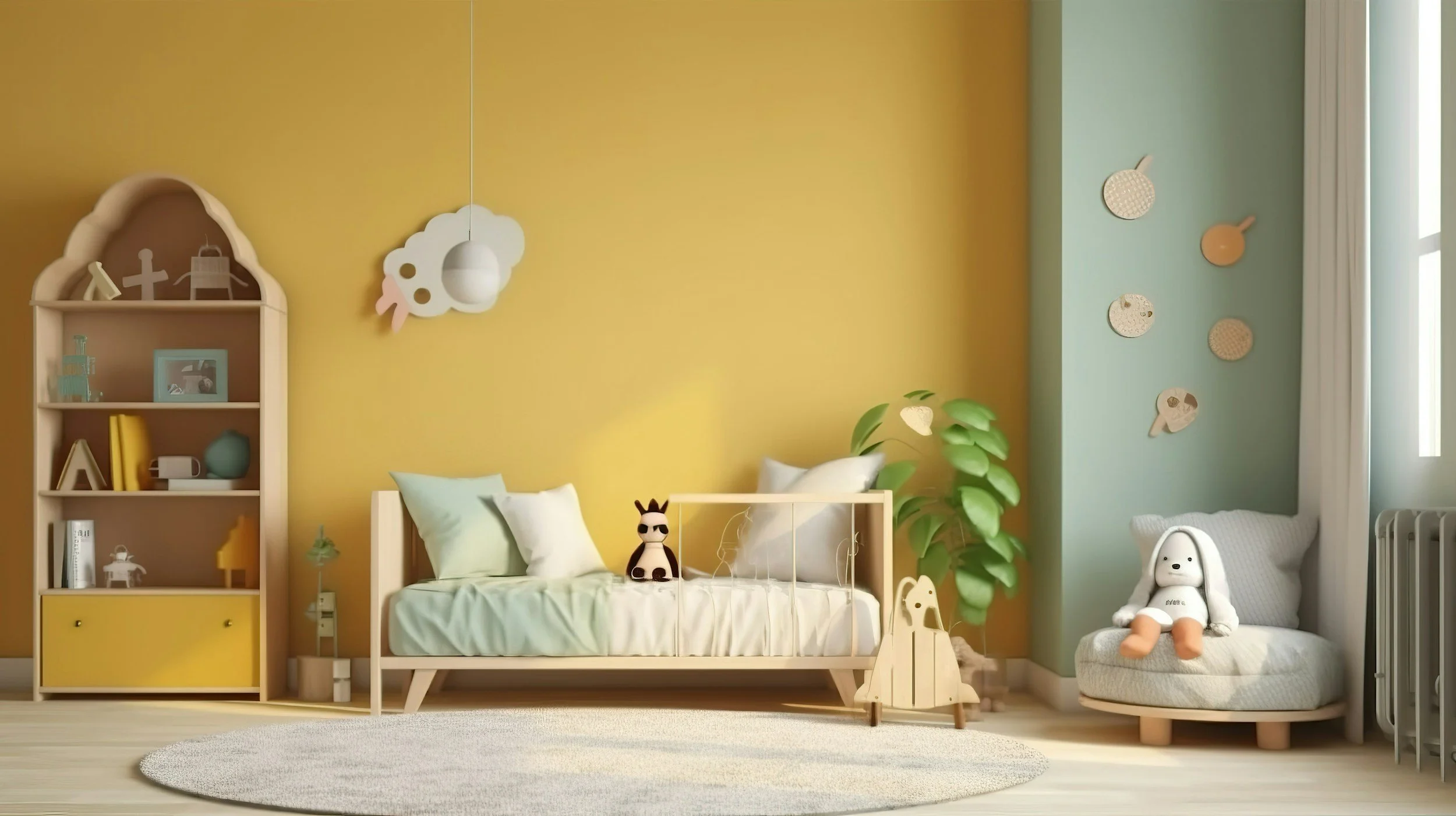
This matters for creativity too. A child who can find what they need without digging through piles is more likely to actually sit down and play or draw. If you want a fuller approach to this, our Clutter Clearing tips for a sacred space apply just as well to a child's room as they do to any other space in the home.
Choose colours that support the room's purpose
Colour has a real effect on mood, and a child's room usually needs to do two jobs at once: support rest and support play. Soft, muted tones (gentle greens, soft blues, warm neutrals) work well as a base because they're calming without being flat. You can then bring in one or two brighter accent colours through cushions, art or a rug to support energy and creativity in the areas used for play.
Avoid painting the whole room in strong, stimulating colours like bright red or orange, particularly near the bed, as these can make it harder for a child to wind down at night. Save the bolder colours for a smaller area, like a desk corner or a reading nook.
Bring in the five elements gently
Feng shui works with five elements, wood, fire, earth, metal and water, and a balanced room usually includes a touch of each rather than being dominated by one. In practice, this can be as simple as a wooden bed (a metal bed is not ideal), a wooden shelf (wood), a warm reading lamp (fire), a soft rug in an earthy tone (earth), a few metal frames or accessories (metal), and a blue accent (water). You don't need to overthink this. A few natural, varied materials in the room will usually cover it without any special shopping trip.
Keep the air and light moving
A stuffy, dark room makes it harder for anyone to feel settled, and children are no exception. Open the window for a few minutes each day where possible, even in winter, to let stagnant air move out. Keep curtains or blinds that allow natural light in during the day, and use a soft, warm light in the evening rather than a harsh overhead one.
If the room has felt heavy or off for a while, particularly after an illness, a difficult phase or an argument that happened in that space, a simple energy clearing can help reset it. Our piece on [signs your home needs an energy clearing](https://thesoulcoach.com/blog/signs-your-home-needs-an-energy-clearing) explains what to look out for and how to approach it gently.
Keep electronics and clocks out of the sleep zone
Screens, chargers and loud clocks close to the bed can interfere with a child's ability to properly switch off, both because of the light they give off and the energy they represent. Where you can, keep these on the other side of the room, away from where your child sleeps. If you're building better sleep habits generally, our guide to [Reiki for sleep](https://thesoulcoach.com/blog/reiki-for-sleep-how-energy-work-supports-rest) has some useful, gentle additions you can bring into the evening routine.
A simple starting checklist
- Position the bed so the door is visible but not directly in line
- Clear the floor space around the bed and doorway
- Give every category of toy or item a proper home
- Use calming base colours with one or two brighter accents
- Keep screens and loud clocks away from the sleep area
- Let fresh air and daylight into the room each day
A calmer room, one change at a time
You don't need to do all of this in one weekend. Start with the bed position and the clutter, since these two changes make the biggest difference the fastest. From there, you can bring in colour, the five elements and any energy clearing as it feels right for your family.
If you'd like some guidance on how to approach this for your own child's room, or you'd like a fuller energy clearing for the space, I'm always happy to help. Get in touch and we can talk through what would work best for your home.
With love, Carolina x